






Our Vision
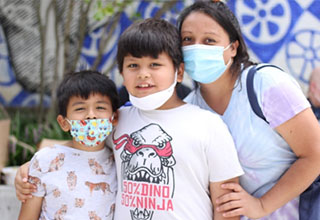
Catholic Charities Helps Solve the Problems of New Yorkers in Need — non-Catholics and Catholics alike. The neglected child, the homeless family and the hungry senior are among those for whom we provide help and create hope. We rebuild lives and touch almost every human need promptly, locally, day in and day out, always with compassion and dignity. We help your neighbors as you would like to be helped if your family were in need.
Our Mission
The Catholic Charities of the Archdiocese of New York seeks to uphold the dignity of each person as made in the image of God by serving the basic needs of the poor, troubled, frail and oppressed of all religions.
Embarking on a Second Century of Providing Help and Creating Hope
Building on a legacy more than a century old, Catholic Charities of the Archdiocese of New York has launched its second century of providing help and creating hope for New Yorkers in need – Non-Catholics and Catholics alike.
Catholic Charities is a vibrant network of agencies, independent affiliated agencies that share a common vision rooted in our Catholic tradition of building a society that is more compassionate and just -especially for the most vulnerable of our New York neighbors.
Our History
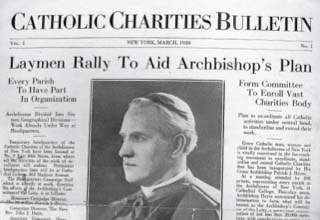
Long before most government safety nets began, lay men and women, clergy and nuns stepped in to serve those in need. At first they worked alone. Later, these groups drew strength by standing together, incorporating The Catholic Charities Archdiocese of New York by a Special Act of the New York State Legislature in 1917. Today we represent a federation of more than 90 agencies, some mentioned below. We now extend from Staten Island to Sullivan County, cross both sides of the Hudson River and provide help and hope for hundreds of thousands of New Yorkers, non-Catholics and Catholics alike.
Early Beginnings
To trace our history is to trace the growth of the United States and New York as a portal to the world. Our history begins with the War of 1812 and the Civil War that left thousands of children orphaned and abandoned. Catholic groups stepped in, becoming the largest caretakers of children in need.
The Great Depression
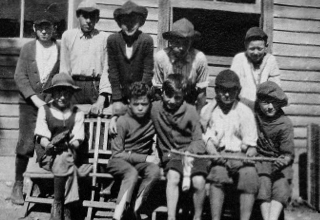
When it threw nearly one out of every two men out of work, Claire and Elizabeth Sullivan, relatives of TV personality Ed Sullivan, responded by founding Casita Maria to help the unemployed find housing and jobs. The Catholic Youth Organization (CYO) offered children a break through fresh-air camps, sports and after-school activities. Job programs, employment and social services bolstered returning veterans, widows and wives.
The Cold War
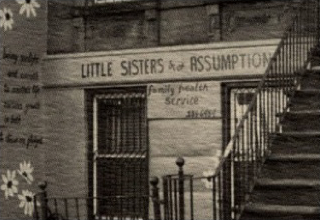
This period in American history brought threats of a nuclear holocaust and was a time of fear. Catholic Charities broadened our mental health services. A small group of nuns opened Little Sisters of the Assumption Family Health Services in East Harlem in 1958. Its community-based program with coordinated case management, day care and counseling is still copied today. Astor Home for Children began a residential treatment center for children with serious emotional disturbances. Catholic Charities also served as an innovator during a time when many children with developmental delays were institutionalized and forgotten. Kennedy Child Study Center became one of the first organizations to provide special education services. The Guidance Institute, meanwhile, pioneered the first day camp for children with disabilities.
Vatican II and Changing Times
Pope John XXIII and the Second Vatican Council met the turbulent 60s head on, fostering the Church’s increased involvement in world affairs. Religious communities and laity built links between people and neighborhoods to support the War on Poverty. During the next three decades, more than 50 new Catholic Charities affiliated agencies developed to address growing needs. Covenant House opened its doors in 1969 on Manhattan’s Lower Eastside to help homeless and runaway youth. CREATE, Inc. began its fight against drugs, unemployment and rising housing costs in Harlem.
The Turbulent 80’s
The 1980s brought with it AIDS, crack cocaine and the deinstitutionalization of persons with mental illness. Catholic Charities agencies mobilized to provide more than 40-percent of all group homes in New York City along with foster care, adoption and preventative services. Nazareth Housing, Incarnation Children’s Center, St. Francis Residences and Beacon of Hope House were established to serve the most vulnerable populations including babies abandoned in hospitals with HIV/AIDS. New Hope Manor, Catholic Charities Community Services of Orange County and fellow affiliated agencies offered a fresh start for the chemically dependent.
Immigrants and Refugees
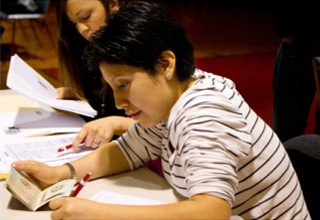
Throughout this history, Catholic Charities continued as the first stop for immigrants fleeing poverty and oppression. Tolentine-Zeiser assisted the influx of Southeast Asian immigrants and refugees. Mercy Center began offering English as a Second Language and after-school programs for Spanish-speaking new arrivals. Project Irish Outreach formed after the first national legalization for undocumented immigrants in 1986. Catholic Charities continues its leadership role today, working with government agencies, service providers and individuals to make sure immigrants receive counsel and services they need.
Responding to Crises
Our continual evolution provides Catholic Charities with flexibility to respond quickly when crises strike. When terrorists attacked on 9/11, Catholic Charities helped establish an integrated system of services. When back-to-back hurricanes Rita and Katrina hit in 2005, Catholic Charities helped hundreds of displaced Gulf-region residents rebuild their lives. When Hurricane Sandy pounded New York in 2012, Catholic Charities helped mobilize comprehensive disaster relief.
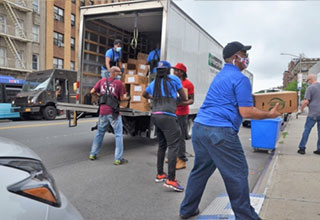
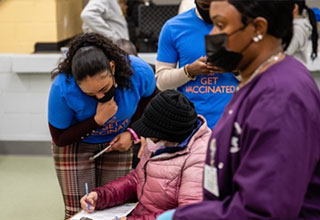
Throughout the COVID-19 crisis, Catholic Charities remained open, pivoted, and continued to provide critically-needed help that preserved hope for hurting New Yorkers. Our dedicated staff rose to challenges brought on by the pandemic and even expanded efforts to meet spiraling levels of need. Over 10 million meals were distributed and nearly 3,000 vaccines were provided to underserved neighborhoods.
When the worst fire in three decades in the city struck a Bronx apartment building in early 2022, killing 17, among them eight children, our agency POTS (Part Of The Solution) and Catholic Charities New York responded with financial assistance and supportive services.
Now, as we begin to move into our second century of service, we draw on our history of innovation and service to continue to evolve and touch almost every human need. Generous support from our benefactors has enabled us to respond to each need with strength and compassion – a guiding principle for the next 100 years.